
Prof Lydia Mosi - Reflections for International Women's Day 2026
Leading Change in African Science
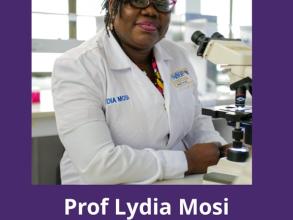
As an African woman scientist working in Ghana, my journey in science has been shaped by resilience, purpose, and an unwavering commitment to communities too often forgotten. My work focuses on Neglected Tropical Skin Diseases, with an emphasis on Buruli ulcer - a disease that disproportionately affects the rural poor and carries deep stigma. My primary employment as an Associate Professor at the Department of Biochemistry, Cell and Molecular Biology at the University of Ghana is also a role that brings me extreme fulfilment and a strong sense of service. Additionally, my expertise as a trained facilitator for Inclusive Innovation, an organisation that facilitates workshops to help people collaborate across boundaries, extends my purpose beyond my scholarly voice. To do all this as a woman and as an African is both a privilege and a profound responsibility.
The challenges I face in my research and career are layered. First, there is the structural imbalance in global health research. Funding for neglected tropical diseases remains limited compared to high-profile global conditions. Within that limited space, African women scientists often face unequal access to research grants, laboratory infrastructure, mentorship, and leadership opportunities. I have sat in rooms where my expertise was questioned before it was heard. I have navigated expectations that I should prioritise family over fieldwork or remain in supportive roles rather than lead multidisciplinary research teams.
Field research presents another set of struggles. Working in communities affected by mining activities, poverty, and weak health systems requires physical stamina and emotional resilience. As a woman researcher, community engagement sometimes demands negotiating cultural perceptions about gender roles. Yet it also offers a powerful advantage: women in communities often open up more readily to female scientists, particularly when discussing stigmatising skin conditions.
Balancing scientific productivity with invisible labour is another reality. Women in academia frequently carry disproportionate teaching, mentoring, and administrative responsibilities. These roles are meaningful, but they can slow publication output in systems that measure success narrowly by metrics.
What needs to change?
First, equitable funding pipelines that intentionally support African women scientists - not as token representatives, but as principal investigators shaping research agendas. Second, institutional policies that value mentorship, community engagement, and implementation research alongside publications. Third, a stronger continental research infrastructure so that African data are generated, analysed, and owned within Africa. Finally, we must normalise women in scientific leadership so that our presence no longer feels exceptional.
And yet, there is much to celebrate. We are witnessing a generation of African women leading groundbreaking work in infectious diseases, genomics, and health systems research. Collaborative networks are growing. Young girls now see scientists who look like them studying diseases that affect their own communities. I have the wonderful opportunity to mentor and inspire the next generation of African female scientists, and I am privileged to do this in networks like the Mwele Malecela Mentorship Programme, STEM Elevate, the HYPOVAX Global Mentorship Programme, and INSPIRE 2026.
To be a woman in science in Africa is to stand at the intersection of challenge and possibility. Despite barriers, we persist - not only to advance knowledge and inspire young female scientists, but to restore dignity to those living with neglected tropical skin diseases. Our presence in science is not symbolic; it is transformative.
About Lydia
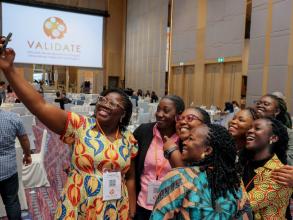
Lydia (left) with colleagues at the VALIDATE Annual Meeting 2024
Professor Lydia Mosi is an Associate Professor of Cell and Molecular Biology in the Department of Biochemistry, Cell and Molecular Biology at the University of Ghana, and Deputy Director (Administration) of the West African Centre for Cell Biology of Infectious Pathogens. She holds a PhD in Microbiology from the University of Tennessee. Her research focuses on the transmission of Buruli ulcer, caused by Mycobacterium ulcerans, as well as identifying metabolic markers to support the development of new diagnostic tools and improve the integrated diagnosis and management of neglected tropical skin diseases.
Her laboratory is a core member of the World Health Organisation Laboratory Network for Skin NTD diagnosis (SkinNTD-LABNET). Professor Mosi is a Fellow of both the African Academy of Sciences Affiliates Programme and the African Science Leadership Programme, where she also serves as a facilitator. She is also a recipient of the World Health Organisation-funded Mwele Malecela Mentorship (MMM) Programme for Women in Neglected Tropical Diseases.
Watch Lydia discuss her work on Mycobacteria Ulcerans
VALIDATE Seminar: Mycobacterium ulcerans Transmission in West Africa (January 2025)
Buruli ulcer is a severe, slowly progressing skin infection caused by the environmental bacterium Mycobacterium ulcerans. The mode of transmission is still unknown. The infection is characterised by large, painless ulcers with undermined edges due to a lipid toxin called mycolactone, produced by the bacteria. Complicating transmission studies is the fact that mycolactone-the major virulence factor-has been found in other environmental mycobacterial species (MPMs) that cause disease in some animals. Although there are no reports of human disease caused by these novel species, they share similar ecological niches in endemic aquatic environments. Dr Lydia Mosi and her team, working within the One Health framework, propose that the overlapping environmental habitats of the pathogen, animals, and humans directly influence its transmission. In this seminar, Lydia sheds light on efforts made to uncover M ulcerans transmission in West Africa, focusing on both environmental and laboratory model-based investigations spanning the past 20 years.