Dr Luciana Balboa - Reflections for International Women's Day 2026
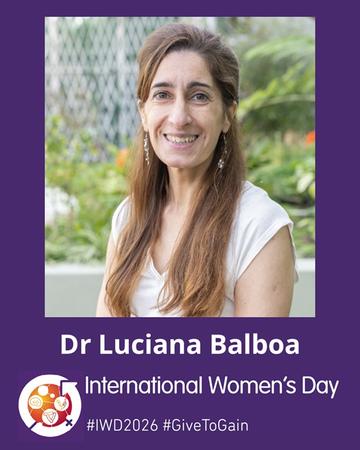
For International Women's Day, I've been invited to share a little about my journey as a woman in science. It's a story I'm happy to tell — not because it's unique, but because in many ways, I suspect it might sound familiar. It's a story about unexpected questions, a woman mentor who gave me opportunities, the beautiful chaos of motherhood, and the resilience it takes to keep going in a country that doesn't always invest in science.
My first real taste of the "additional challenges" of being a woman in this field came right after I graduated from the University of Buenos Aires with a degree in Biological Sciences. I had my first interview for a fellowship to study the immunology of E. coli. I was prepared — meticulously prepared — on the science, the health impact, everything. But the questions that threw me were: "Do you have a partner?" "Do you plan on having children soon?" Of course, I didn't get that fellowship.
That moment could have been a door closing, but instead it led me to another one. A researcher at the same institute, Dr. María del Carmen Sasiain (Maricarmen to everyone), had a fellowship to offer on tuberculosis. Our interview was completely different. We talked about my skills, my potential. Maricarmen, a scientist and mother of four, had no time for anything but solutions. She was tenacious, direct, and from day one, she made me feel that I could — that I was valuable.
That kind of support is transformative. When I wanted to build international collaborations, she simply said, "Generate them." And with her backing, I did. I spent time in Germany, then Mexico. Crucially, when Maricarmen was invited to speak at a major Latin American immunology conference, she advocated for them to invite me instead, insisting that I was the one generating the research. That single act of generosity put me in a room with a representative from the Bill & Melinda Gates Foundation. It led to my lab becoming one of the first Latin American members of the CTVD network. It also helped me build one of the most significant scientific collaborations of my career: an International Associated Laboratory with the group led by Olivier Neyrolles in France, made possible with the support of Geanncarlo Lugo-Villarino and Christel Verollet.
The lesson I carried from all this is the immense power of an empathetic woman supporting another — to not label, but to promote and empower, especially if that woman is your subordinate. The positive impact of motivating words and timely opportunities multiplies in ways you can't predict.
In 2017, my first child was born, and my second arrived in 2019. Suddenly, I was navigating the early years of motherhood alongside supervising my own students for the first time. It was a learning experience for all of us — in patience and respect. I never fully stopped working during my maternity leaves, a choice I know some might question. But it didn't feel like a burden. Sometimes, I needed to reconnect with my work to feel like I was returning to myself. I don't believe there are magic formulas that work for everyone. Each mother finds her own way to strike that elusive balance.
My perspective has also been deeply shaped by doing science in Argentina, a country where resources for research have always been limited. These challenges have become acute in recent years. Funding has been halted, institutes downsized, and our salaries have fallen dramatically. I thought a lot about leaving. But I also felt strongly that within my community was where I had the most to give. I decided to stay, which meant maximizing my international networks and focusing on fundraising globally to survive. Programmes like the ECDN at the VALIDATE Network were key for me; they gave me tools to improve my grant writing and to strengthen my confidence in presenting myself, even in English. There were many moments when I felt I had no more strength. But there were always incredible women there, holding my spirit up: my mother, my mentor Maricarmen, my best friend, my volleyball teammates, and the women in my professional networks of early and mid-career researchers, including the ECDN, the Global Young Academy, and the Argentinian Young Academy.
Last year, I received an honorable mention at the L’Oréal-UNESCO Awards in Argentina for our work developing a potential new therapy for pleural tuberculosis. It felt like a recognition not just of the science, but of the journey.
My story isn't about individual wins. It's a testament to the power of women who lift each other up — who give opportunities, who simply say "you can." The challenges are real, but so is the strength we find in each other.
About Luciana
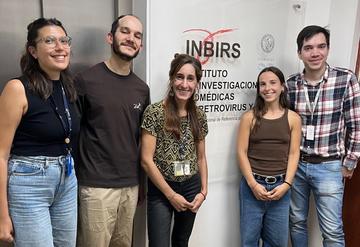
Dr Luciana Balboa is a biomedical researcher specialising in infectious diseases at the Institute for Biomedical Research on Retroviruses and AIDS (INBIRS), affiliated with the University of Buenos Aires and CONICET in Argentina. Her research focuses on understanding how the immune system responds to Mycobacterium tuberculosis, with particular emphasis on the immunometabolic aspects of tuberculosis. She has led the establishment of the first French–Argentine International Associated Laboratory dedicated to tuberculosis research, including work on HIV co-infection.
Alongside her research, Dr Balboa plays an active leadership role in the global scientific community. She is currently Co-President of the Academia Joven de Argentina and a member of the Global Young Academy, both of which advocate for the role and visibility of early-career researchers worldwide. She also serves on the board of CoARA, an international coalition working to reform research assessment practices, and has previously held leadership roles within the Latin American Society of Tuberculosis and other Mycobacterioses.
Watch Luciana speak at the VALIDATE Annual Meeting 2025
Accelerating BCG Efficacy: Targeting Dendritic Cell Migration in Tuberculosis Immunization
https://www.youtube.com/embed/AzZ8J70G9a4?si=X71of_8rMEfZ-0Y2Speaking at the VALIDATE Annual Meeting 2026, Luciana explores a novel strategy to enhance the effectiveness of the BCG vaccine by improving how quickly the immune system is activated following vaccination. While BCG remains the only widely used vaccine against tuberculosis, its protective efficacy varies significantly in adolescents and adults, and one largely overlooked factor is the speed at which immune responses are initiated.
Focusing on the role of dendritic cells in transporting antigens to lymph nodes, Luciana examines how metabolic regulation through the HIF1A pathway may enhance their migration and accelerate immune priming. This collaborative project between institutions in Argentina and the United States aims to generate new insights into early immune activation and identify potential markers of vaccine-induced protection, helping to inform future strategies for improving TB vaccines.

